
Bulletin
The Rise of Baffled (Q-Bags): Maximizing Logistics Efficiency and Container Space
A standard bulk bag bulges into a barrel. A baffled bag holds a square. The difference is measured in containers, not centimetres.
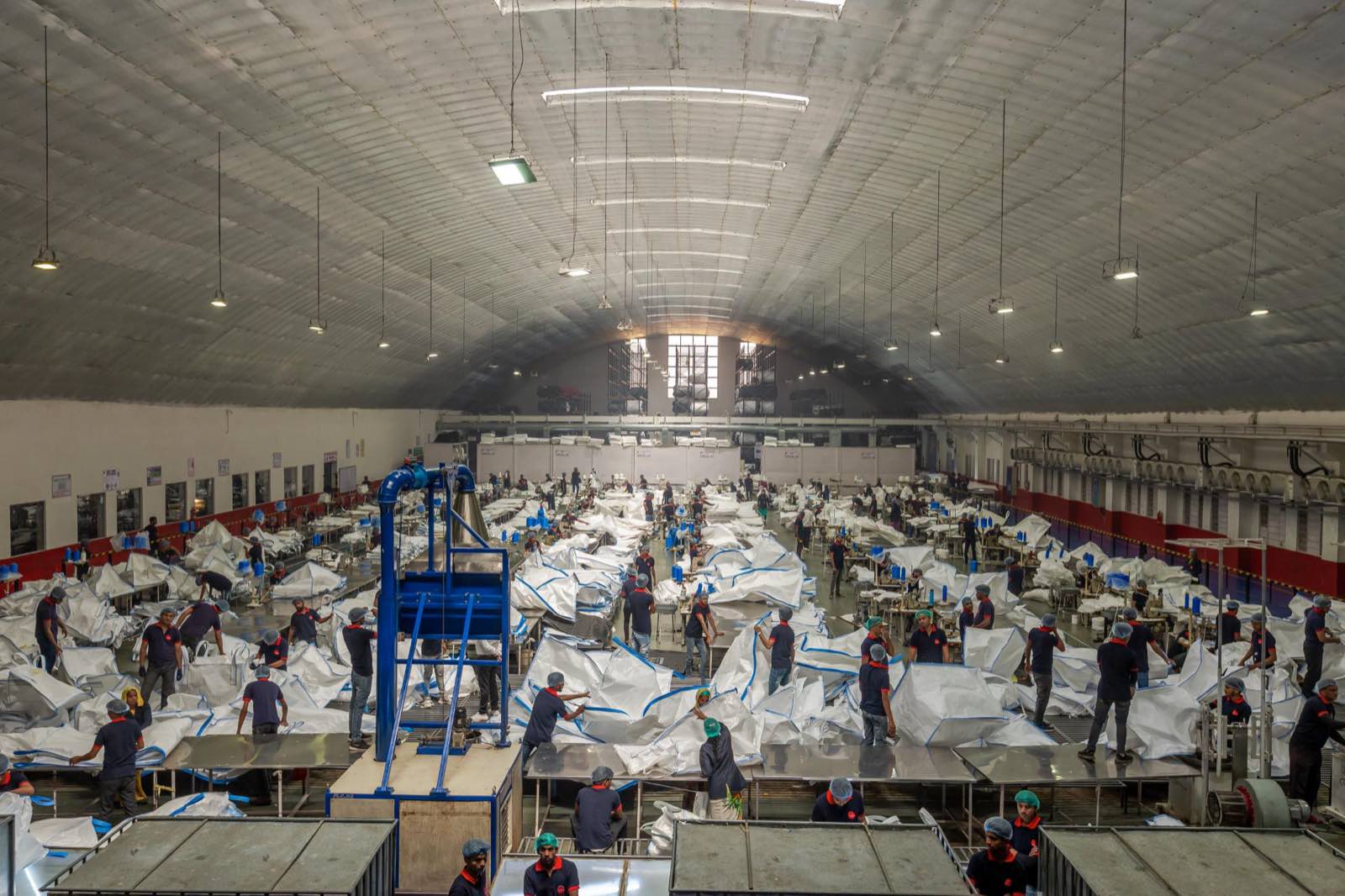
Fill a standard four-panel FIBC and it will not stay square. Internal pressure pushes the walls outward until the bag takes on a rounded, barrel-like profile. Every unit of that bulge is container volume that has been paid for and not used, and every rounded shoulder is a stacking surface that has stopped being flat.
The baffle bag — widely called the Q-bag, for the square shape it holds — solves this with a piece of engineering so simple it is easy to underrate: fabric panels sewn into each of the four internal corners, restraining the walls and forcing the filled bag to keep its intended rectangular form.
Why the shape pays for itself
The commercial case is arithmetic. A bag that holds a true square uses close to its full nominal footprint, so more bags fit in the same container floor area, and because the top surface stays flat, they stack reliably rather than leaning. Depending on bag dimensions and container type, operators commonly find the shift converts a shipment into fewer containers — and freight, not fabric, is the dominant cost in most bulk supply chains.
The effect compounds in warehousing. Square bags rack and block-stack in predictable rows. Round bags need aisle allowance for the bulge, wander out of alignment as they settle, and are the reason many warehouses quietly stack bulk bags one lower than the racking permits.
There is a safety dimension to the same property. A stack of stable, square, flat-topped units behaves predictably. A stack of settling barrels does not.
The baffle types, and what each is for
Not all baffles are the same, and the choice is driven by the product inside.
Standard fabric baffles are panels of woven polypropylene sewn into the corners. They give the strongest shape retention and suit free-flowing granular products where a modest restriction to flow is irrelevant.
Net baffles replace solid fabric with an open mesh. Product moves freely through the baffle during filling and discharge, which matters for powders and cohesive materials that would otherwise bridge behind a solid panel. Shape retention is very slightly softer; flow behaviour is considerably better.
Tie baffles use cord or webbing rather than a panel. They are the lightest option, they interfere least with flow, and they suit products where any surface that can retain residue is a hygiene concern.
Circular baffled bags apply the same principle to a tubular body, giving a squared profile without the vertical seams of a four-panel construction — useful where seam count is a contamination or strength consideration.
And for liners, baffle liners carry the shape control inside the liner itself, so that a lined bag does not lose its square profile at the liner wall.
What to specify, and what to check
Three details separate a baffle bag that works from one that disappoints. The baffle height and stitch pattern determine whether the shape holds under a full load or only at the top. The flow apertures — their size and position — decide whether powder bridges behind the panel and leaves residue that becomes both a yield loss and a cleaning task. And the seam construction where the baffle meets the wall is a stress concentration; it is the first place a poorly built baffle bag fails.
It is worth filling a sample before committing. A baffle bag is a shape promise, and the only honest test of a shape promise is a filled bag on a pallet with a tape measure against it.
Where they earn their place
Baffled construction is now close to a default for high-volume export of chemicals, minerals, resins, agricultural inputs and food ingredients — anywhere the product ships far enough that container utilisation dominates the landed cost. For short domestic runs with plenty of warehouse space, a standard bag may still be the rational choice.
The question to ask is not whether a baffle bag costs more per unit. It is what a container costs, and how many of them the shape is quietly wasting.
Certified to the standards global brands demand






Ready to secure your supply chain?
Tell us your material, load and handling requirements — our export desk will specify the right bag and come back with a quote.