
Bulletin
The Rise of Electrostatic Safety: Why Type C Conductive Bags Are Dominating Hazardous Material Transport
Type C bags protect people only when they are grounded. That single conditional is the reason they are both the industry’s default and its most common point of failure.
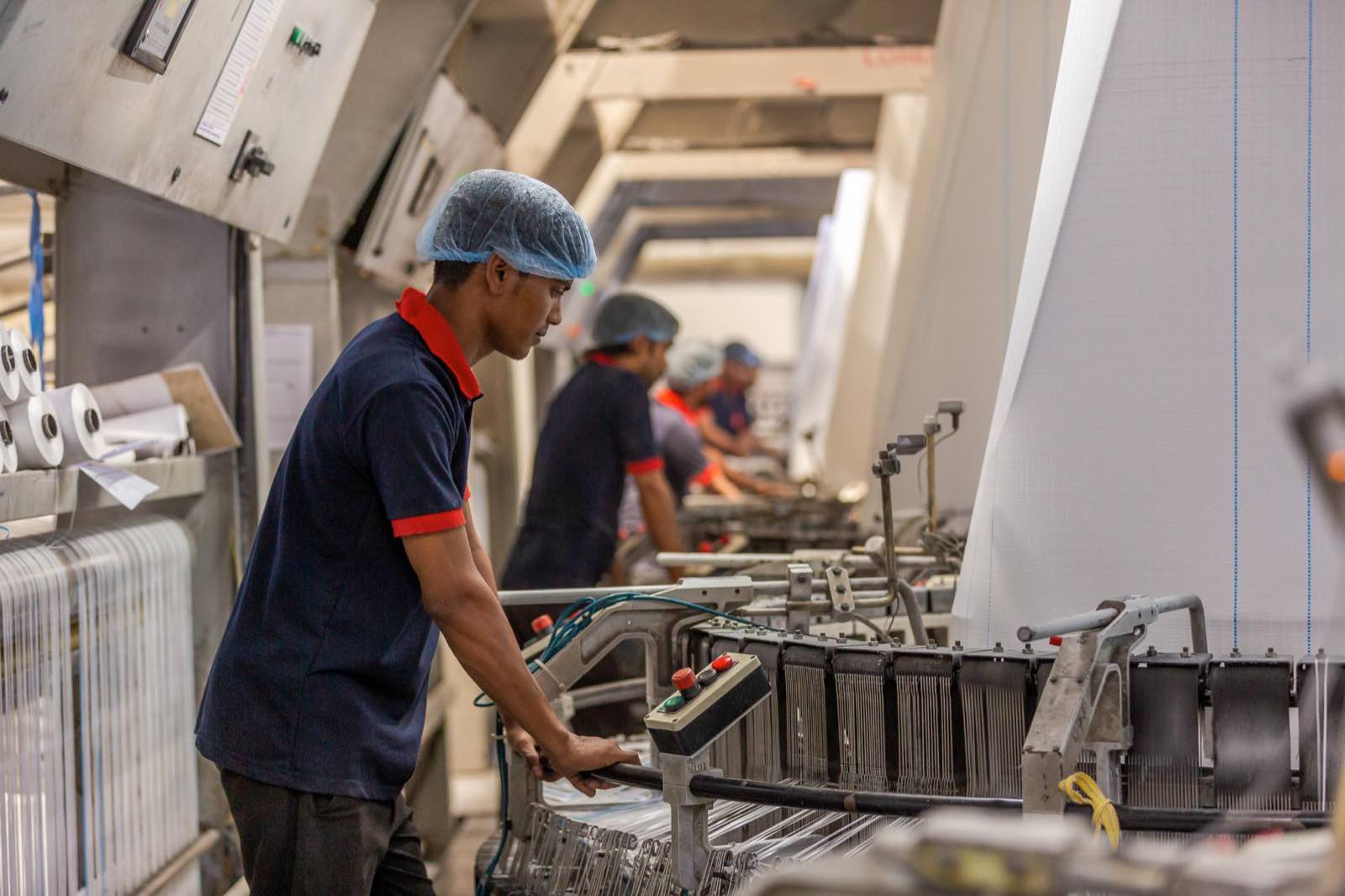
Filling and discharging a bulk bag moves an enormous quantity of particles against fabric at speed. That movement separates charge, and in the wrong atmosphere the resulting discharge is an ignition source sitting inside the process. The electrostatic classification of an FIBC is therefore not a feature — it is a control measure, selected against the hazard rather than against the product.
The four types, briefly and precisely
IEC 61340-4-4 defines four types, and the distinctions are frequently misstated.
Type A is plain woven polypropylene with no electrostatic protection. It is appropriate only for non-combustible product in an atmosphere with no flammable dust or vapour. It accumulates charge and it should be treated as unsuitable the moment either condition is in doubt.
Type B is made from fabric with a low breakdown voltage, which prevents the propagating brush discharges capable of igniting dust. It does not dissipate charge and offers no protection against flammable vapours or gases. It suits combustible powders in an atmosphere free of flammable solvent.
Type C, also called conductive or groundable, incorporates interconnected conductive threads throughout the fabric. Charge is conducted away — provided the bag is bonded to a verified earth. Grounded, it is the most robust protection available, and it is approved for use with flammable vapours and gases. Ungrounded, it is arguably more dangerous than a Type A bag, because a conductive network that is isolated stores charge and releases it as a single energetic spark.
Type D uses antistatic or static-dissipative threads that neutralise charge through corona discharge, without requiring grounding. It removes the human-error step entirely, which is its whole appeal, but it must be kept clean — surface contamination with conductive material such as grease or salt can compromise its behaviour.
Why Type C has taken the lead
Type C’s dominance in hazardous transport comes from three properties.
It is the broadest permission: with a verified ground, it is acceptable across flammable dust, vapour and gas atmospheres, so a single specification covers sites that would otherwise need several. It is verifiable: the resistance to the grounding point can be measured on a specific bag, on a specific day, with an instrument — which is exactly what an auditor wants and what Type D cannot offer as directly. And it is unaffected by humidity in the way dissipative fabrics can be, which matters in tropical, coastal and desert conditions alike.
For a multinational with sites across several climates and hazard classifications, one groundable specification is operationally simpler than four regional ones.
The failure mode, and how to close it
Almost every Type C incident traces back to the same root: the bag was not properly grounded. The ground tab was not connected. It was connected to painted steel rather than clean metal. It was connected to a structure that was not itself earthed. Or the resistance was never measured and the connection was assumed.
Closing this requires it to be a procedure rather than a habit. Ground before filling begins and before discharge begins, not partway through. Connect to a verified earth point, not to convenient nearby metal. Measure resistance to ground periodically with a dedicated tester, and record it. Inspect ground tabs for damage, because a severed conductive thread network is invisible from outside. And train on the reason, not just the step — an operator who understands that an ungrounded Type C bag is worse than no protection will not skip it under time pressure.
Choosing correctly
The selection question is not what the product is; it is what the atmosphere is during filling and discharge. Non-combustible product, safe atmosphere: Type A. Combustible powder, no flammable solvent present: Type B. Flammable vapour or gas present, and a reliable grounding procedure in place: Type C. Flammable atmosphere but grounding cannot be reliably assured — remote sites, contractor-operated discharge, frequent operator turnover: Type D is the safer engineering choice, and specifying it is not a compromise.
The most expensive mistake in this field is not choosing the wrong type. It is choosing Type C for a site that will not ground it.
Certified to the standards global brands demand






Ready to secure your supply chain?
Tell us your material, load and handling requirements — our export desk will specify the right bag and come back with a quote.