Bulletin
FIBC Industry Outlook: Navigating Supply Chain Shifts and Raw Material Volatility
Polypropylene price moves faster than most procurement cycles can absorb. The manufacturers who ride it out are the ones who own more of the process.
The FIBC industry sits at an uncomfortable junction. Its input is a petrochemical commodity whose price responds to crude, to naphtha cracker economics and to regional capacity swings. Its output is sold to buyers who plan on annual budgets and dislike surprises. Between those two facts sits the manufacturer, absorbing the difference.
Where the volatility actually comes from
Polypropylene pricing is driven by feedstock cost, by cracker and PP plant capacity coming online or going into turnaround, and by freight. None of these move in step. A capacity addition in one region can soften prices there while an outage tightens another, and container rates can swing the landed cost of resin independently of the resin itself.
For the buyer, the practical consequence is that a bulk bag quotation has a shorter honest shelf life than it used to. A supplier holding a price for six months is either hedged, absorbing risk they have not priced, or planning to renegotiate.
The shifts reshaping the demand side
Three movements are changing where bulk bags are bought and how they are specified.
The first is supply base diversification. Buyers who once concentrated bulk packaging with a single low-cost source are now deliberately holding qualified alternatives in more than one country. The driver is not price; it is the memory of the periods when a single source became unavailable and there was no qualified substitute ready.
The second is the rise of documentation as a purchasing criterion. Food, pharmaceutical and chemical buyers increasingly filter suppliers on audited certification before they look at price at all — BRCGS grade, cleanroom class, UN test reports, food-contact declarations. This narrows the field considerably and shifts competition away from the lowest quotation.
The third is regulatory pull on materials. Extended producer responsibility schemes, recycled-content expectations and take-back obligations are arriving at different speeds in different markets, and they are beginning to influence bag design — particularly the move toward monomaterial construction.
Why vertical integration is the structural answer
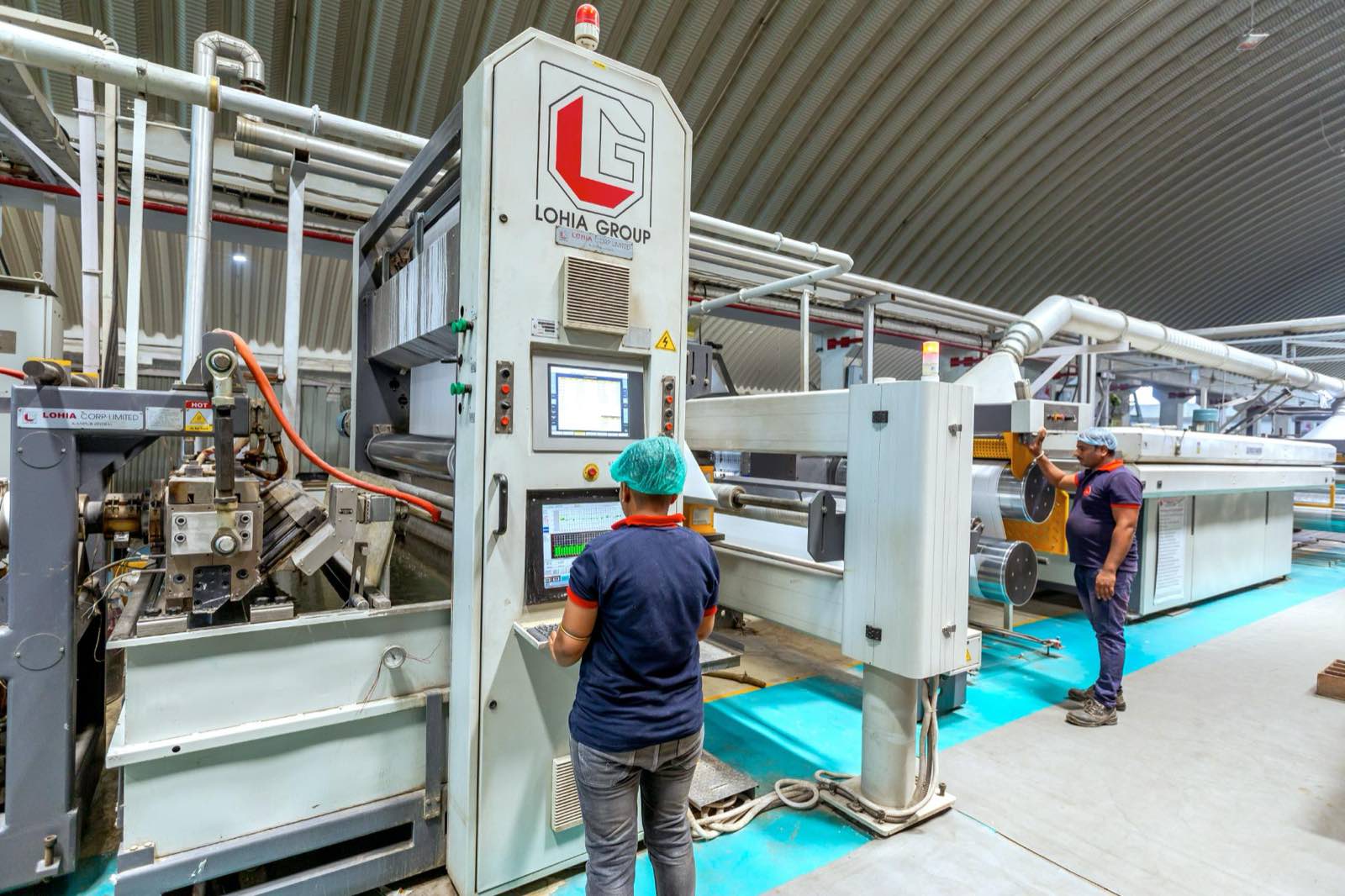
A manufacturer who buys woven fabric is exposed twice: once to resin price and once to the fabric converter’s margin and lead time. A manufacturer who extrudes tape, weaves fabric, produces webbing and forms liners in-house buys one input — resin — and controls everything downstream of it.
That control shows up in three ways during a volatile period. It shortens lead time, because the queue is internal and can be resequenced. It protects quality, because a substituted fabric from an unfamiliar converter is one of the most common causes of a failed batch. And it makes cost transparent, so a price movement can be explained to a customer as a resin movement rather than absorbed silently until the relationship breaks.
It also makes traceability real. When a customer asks which resin lot is in a specific bag, an integrated manufacturer answers from records; a converter answers by asking someone else.
What buyers should do differently
Volatility is not going to be solved by procurement cleverness, but it can be managed. Index-linked pricing, where the bag price moves with a published resin index, removes the negotiation theatre from every price change and is increasingly accepted on both sides. Longer qualification horizons — approving a second supplier before you need one — cost little and are only possible in calm periods. And forecast sharing genuinely works: a manufacturer with visibility can buy resin better, and a portion of that lands back with the customer.
Above all, buyers should be sceptical of quotations that are conspicuously below the market. In a period of input volatility, an unusually low price is a signal about specification or about the supplier’s balance sheet, and both of those become the buyer’s problem eventually.
The outlook
The realistic expectation for the period ahead is continued input volatility, continued tightening of documentation requirements, and steady pressure toward recyclable design. None of these favour the lowest-cost converter. They favour manufacturers who own their process, can evidence what they do, and can hold a conversation about cost that both parties recognise as honest.
Certified to the standards global brands demand






Ready to secure your supply chain?
Tell us your material, load and handling requirements — our export desk will specify the right bag and come back with a quote.