
Bulletin
The Future of Sustainable Packaging: Are Recyclable FIBCs the Answer?
Polypropylene is one of the most recyclable polymers in commercial use. The obstacle has never been the material — it is what happens to the bag after it is emptied.
Sustainability in bulk packaging is usually discussed as a materials problem. It is more accurately a logistics problem wearing a materials costume. Polypropylene, the polymer behind almost every FIBC in service, is mechanically recyclable, thermally stable enough to be reprocessed several times, and already carries a well-established recycling identification code. On paper, the bulk bag is one of the easier packaging formats to close the loop on.
In practice, the emptied bag is folded into a corner of a warehouse in a country the manufacturer has never visited, and the loop stays open.
What actually determines recyclability
Three things decide whether a used FIBC can re-enter the material stream, and none of them are the resin.
The first is contamination. A bag that has carried an inert mineral is a clean feedstock. A bag that has carried a reactive chemical, a pigment or an oily product may need washing that costs more than the recovered polymer is worth. This is why recycling schemes tend to establish themselves first in construction aggregates, agricultural inputs and food ingredients, and only later in specialty chemicals.
The second is material purity of the bag itself. A monomaterial bag — polypropylene fabric, polypropylene webbing, polypropylene thread — goes into a single stream. Add a polyethylene liner that is bonded rather than removable, a printed label of a different polymer, or a coated fabric, and the bag becomes a separation job. Designing for recyclability mostly means resisting the temptation to optimise each component independently.
The third is volume at a single point. Recycling is a scale business. Fifty bags in a yard are waste; five thousand bags on a pallet are a commodity with a price. This is the real barrier, and it is why the meaningful sustainability innovations in this sector are commercial arrangements rather than material science.
Reuse comes before recycling
The waste hierarchy is not decorative, and in bulk packaging it has an unusually clear application. A single-trip bag built to a 5:1 safety factor is designed to be filled once. A multi-trip bag built to 6:1 is designed, tested and documented for repeated service, and where the product and the route allow it, reusing a bag five times displaces four bags’ worth of polymer, energy and freight before any recycling question arises.
The constraint is discipline. Multi-trip service requires inspection against a defined criteria set before every refill, documented rejection of damaged units, and a cleaning regime appropriate to the product. Operators who cannot commit to that are safer, and often more sustainable, using single-trip bags into a recycling scheme.
Where the real gains sit
Because the bag is light relative to what it carries, the largest environmental effects of a bulk bag are usually not in the bag at all.
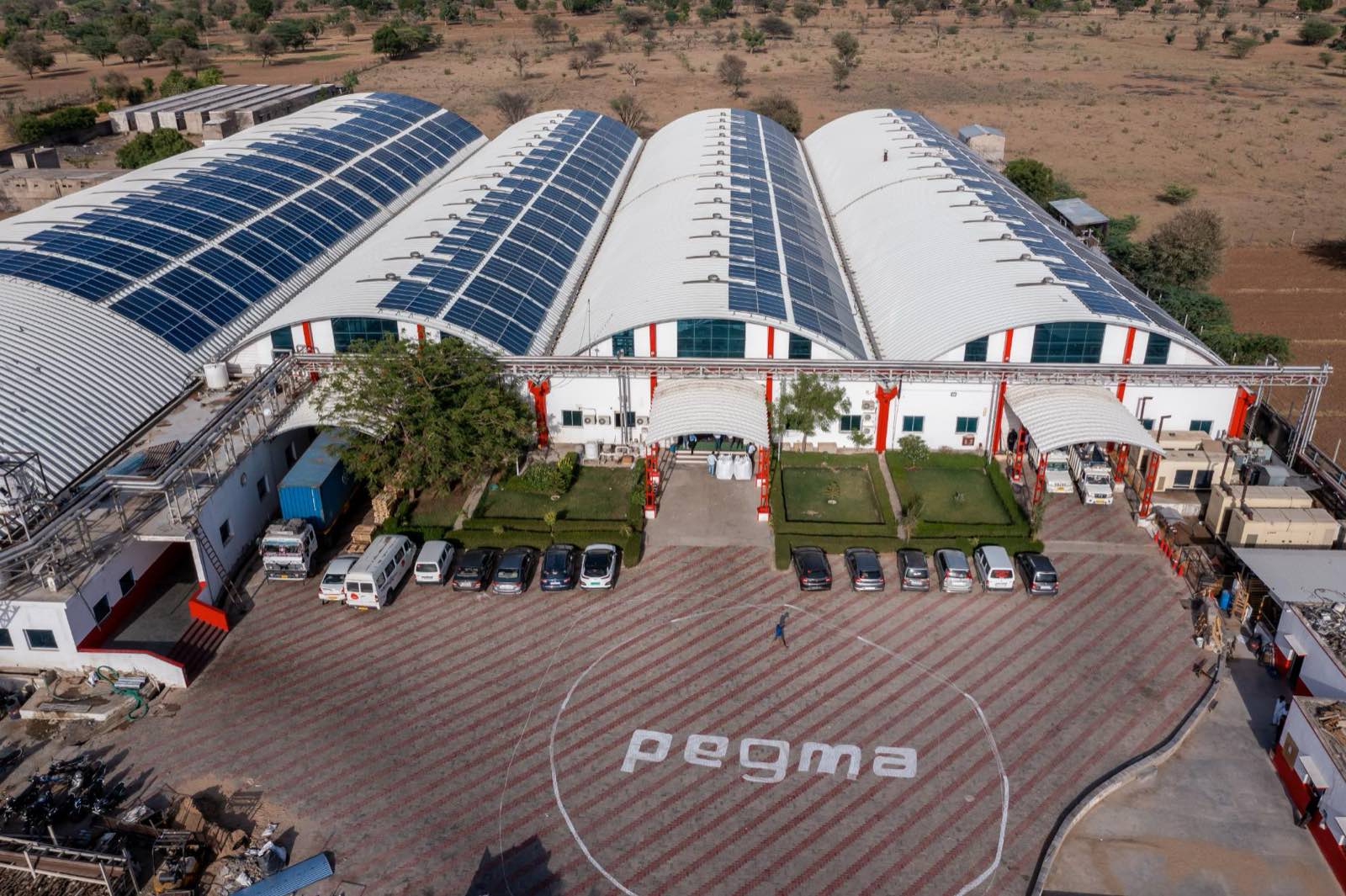
They are in the fill: a baffled bag that squares up holds its shape, stacks stably and uses container volume that a bulging standard bag wastes — often converting a shipment into meaningfully fewer containers. They are in the manufacturing energy: extrusion, weaving and lamination are the energy-intensive steps, and a facility running on solar generation shifts that footprint directly. They are in raw material waste: tape line stability and cutting precision determine how much polymer becomes trim, and trim that is reground and reused in non-food applications never becomes waste at all.
And they are in water and refrigerant — the unglamorous plant-level decisions, like harvesting rainwater for process and sanitary use, or switching to low-GWP refrigerants in cooling systems, that never appear on a product datasheet.
So, are recyclable FIBCs the answer?
They are a necessary part of it and an insufficient one on their own. A recyclable bag that is never collected has delivered nothing. The honest answer is that the sector’s progress will be measured by three things: how many bags are designed as monomaterial, how many end-users are enrolled in a take-back arrangement that makes collection economic, and how much of the manufacturing footprint is displaced at the plant.
Buyers can accelerate all three by asking their supplier a question that has nothing to do with the bag: what happens to it when it is empty?
Certified to the standards global brands demand






Ready to secure your supply chain?
Tell us your material, load and handling requirements — our export desk will specify the right bag and come back with a quote.